
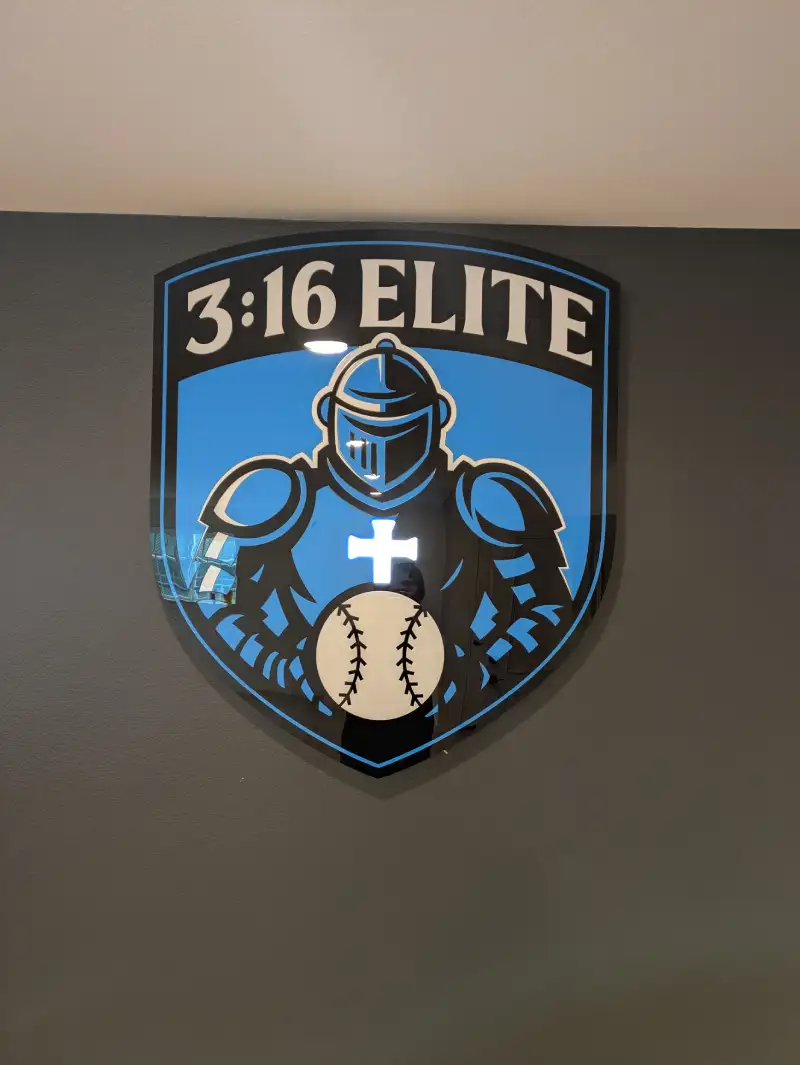
Most business owners spend months choosing the right office space, furniture, and finishes then treat the lobby sign as an afterthought. It’s the first thing a client or job candidate sees when they walk through your door, and it communicates volumes before anyone says a word. A well-executed lobby sign for your business does three things simultaneously: it confirms you’re in the right place, it signals the quality of your organization, and it reinforces your brand in a space where it matters most. A sign that misses on any of those fronts doesn’t just look cheap, it creates doubt.
The difference between a lobby sign that builds confidence and one that looks like an afterthought comes down to four factors: material selection, sizing relative to the wall, lighting, and how well the sign reflects your actual brand identity. Get all four right, and your lobby becomes a credential. Get them wrong, and no amount of nice furniture compensates. Here’s what actually separates one from the other.
The Material You Choose Tells Visitors What Kind of Company You Are
Walk into a law firm and you’ll typically see brushed aluminum or polished metal dimensional letters. Walk into a creative agency and you’ll often find backlit acrylic with custom color fills. That’s not a coincidence, material choice is one of the clearest signals of brand positioning, and clients pick up on it immediately even if they can’t articulate why.
The four materials we use most often for lobby signage each serve different environments and budgets:
| Material | Best For | Finish Quality | Lighting Compatible |
|---|---|---|---|
| Acrylic | Retail, healthcare, modern offices | High, color fills and polish options | Yes, front-lit and halo |
| Brushed Aluminum | Law firms, financial, executive suites | Premium, professional, timeless | Yes, halo-lit preferred |
| PVC / Foam | Budget builds, short-term leases | Standard, painted finish | Limited |
| Dimensional HDU | Branded environments, showrooms | High, paint-matched to brand | Yes, pin-mounted with LED |
One thing we’ve found consistently in our North Texas installations: businesses that invest in dimensional letters or brushed metal get more positive unsolicited comments from clients than those that go with flat-mounted printed graphics. It’s a tactile, three-dimensional impression that flat vinyl simply can’t replicate.
Getting the Size Right: Why Most Lobby Signs Are Too Small
Undersized lobby signs are the most common mistake we see when businesses DIY their signage or order through a generic online vendor. The sign arrives, gets mounted, and looks like a nameplate lost on a large wall. It doesn’t project confidence, it projects indecision.
Proper sizing depends on viewing distance and wall height. As a general rule:
- For a standard 10-foot reception wall, sign height for the primary logo or wordmark should land between 18 and 30 inches, depending on letter weight and whether the sign stands alone or is paired with a tagline.
- Width should occupy 50 to 70 percent of the available wall span. A sign that is narrower than half the wall looks timid; one that runs edge to edge often looks cluttered.
- Vertical center point of the sign should sit at or slightly above seated eye level, typically 56 to 62 inches from the finished floor so it reads naturally to both standing and seated visitors.
Before any sign goes into production, we do a digital mock-up scaled to your actual wall dimensions. That step eliminates the sizing regret that happens when you’re looking at a sign in person for the first time after it’s already mounted.
Lighting: The Detail That Separates Good Lobby Signs from Great Ones
Not every lobby sign needs illumination, but when a space has variable lighting — overhead fluorescents, windows that shift with the time of day, or ambient lighting meant for atmosphere rather than visibility a lit sign guarantees consistent readability and visual presence regardless of conditions.
Two lighting approaches dominate office lobby signage:
- Halo-lit (reverse-lit) letters: LED modules mounted behind dimensional letters cast a soft glow against the wall, creating a floating, upscale effect. This approach works especially well in darker reception areas and professional service environments.
- Front-lit acrylic: Edge-lit or face-lit acrylic panels with LED backlighting are a common choice for modern corporate interiors. They’re clean, budget-friendly relative to dimensional metal, and allow for brand color precision through custom color-matched faces.
The decision usually comes down to brand positioning and budget. If your lobby already has excellent ambient lighting and your brand uses bold, saturated colors, a non-illuminated dimensional sign may be all you need. If the space is dimmer or your brand relies on subtle finishes like brushed chrome, illumination transforms the sign from a plaque into a feature.
Brand Alignment: The Part Most Sign Companies Skip
A lobby sign that doesn’t match your brand standards is, in a real sense, worse than no sign at all; it tells every visitor who knows your brand that someone in the organization approved a shortcut. Correct Pantone or CMYK values, the exact typeface from your brand guide, and accurate logo proportions are non-negotiable.
When we take a brief for interior signage, we always ask for the brand guide file, not just the logo. That document tells us the approved color values, the minimum clear space around the mark, any secondary typefaces in use, and how the logo should be treated on light versus dark backgrounds. A sign fabricated from a low-resolution logo file or an approximated color will never look right, even with excellent materials and installation.
This matters especially for multi-location businesses and franchises operating in North Texas. Consistent interior signs across all your locations reinforce brand recognition and signal operational standards to clients who visit more than one site.
Ready to Design a Lobby Sign That Actually Works?
We design and install lobby signs and interior signage for businesses across North Texas, from single-location professional offices to multi-tenant commercial buildings. If you’re ready to brief your project, start with our interior signs page or reach out directly for a free quote. We’ll do a site measure, send a digital mock-up scaled to your actual wall, and walk you through material options before anything goes into production.
Frequently Asked Questions About Lobby Signs for Business
What is the best material for a lobby sign for a business?
The best material depends on your brand positioning and lobby environment. Dimensional aluminum or brushed metal letters are the top choice for professional services firms, they read as premium and age well. Acrylic with color fills is a strong option for modern offices and healthcare environments. PVC or painted foam letters work for budget-conscious builds or short-term leases but don’t project the same quality at close viewing distance.
How big should a lobby sign be?
A lobby sign should occupy 50 to 70 percent of the available wall width and sit at or slightly above seated eye level roughly 56 to 62 inches from the floor. For a standard 10-foot reception wall, plan for a primary sign height of 18 to 30 inches. Most first-time buyers underestimate the right size; a digital mock-up scaled to your specific wall dimensions eliminates guesswork.
Do lobby signs need to be illuminated?
Not every lobby sign requires lighting, but illumination solves visibility problems in spaces where ambient light varies throughout the day. Halo-lit dimensional letters, with LEDs mounted behind the letters cast a refined glow and work well in executive environments. Front-lit acrylic is a cleaner budget alternative. If your lobby has consistent, strong overhead lighting and your brand colors are bold, a non-illuminated dimensional sign often reads just as powerfully.
Can a sign company match my exact brand colors for a lobby sign?
Yes, any reputable sign fabricator should be able to match your brand’s Pantone or CMYK values. Share your brand guide file, not just the logo PNG, so the sign company has accurate color specifications, typeface information, and clear space rules. Color approximation is one of the most common reasons lobby signs look off after installation, so insisting on a proof with confirmed color values before production is worth the extra step.
How long does it take to get a lobby sign made and installed?
A standard lobby sign, dimensional letters or acrylic, typically runs two to four weeks from approved proof to installation, depending on material, complexity, and current shop lead times. Non-illuminated signs tend to move faster than illuminated ones, which require electrical rough-in coordination. For tenant improvement projects, engage your sign vendor as early as the design phase so signage doesn’t delay your occupancy timeline.
What information should I give a sign company when ordering a lobby sign?
Come prepared with: your brand guide or logo files in vector format (AI, EPS, or SVG), Pantone or CMYK color values, the wall dimensions and material (drywall, brick, stone, glass), whether any electrical outlet is accessible near the sign location, and any landlord sign criteria restrictions if applicable. The more complete your brief, the faster the design and approval process moves.