
Every North Texas city with an active commercial corridor requires a permit before a new exterior sign goes up, and every one of them has some version of the same enforcement process for signs that skip that step. An unpermitted sign in Texas does not just risk a fine. It can trigger a removal order, force a business to pay reinspection fees on top of the original permit cost, and complicate any future sign change on the same building. Sign permits exist for reasons that go beyond city paperwork, including structural load requirements for wind and electrical safety inspections for illuminated signs, which is part of why enforcement tends to be more consistent than business owners expect. We’ve walked owners through this process enough times to know the fine print rarely gets read until after a code enforcement officer has already left a notice on the door.
How Cities Actually Discover an Unpermitted Sign

Code enforcement rarely finds an unpermitted sign through routine patrol alone. In our experience, most violations surface one of three ways: a competitor or neighboring business files a complaint, a city inspector notices the sign while reviewing an unrelated permit application on the same property, or the sign shows up during a routine business license renewal that cross-references the property file. Some North Texas cities, including several in Collin and Denton counties, have moved to satellite imagery review for larger commercial corridors, which means a sign installed without review can get flagged months later even if no one ever complained. Once a sign is on a city’s radar, the file stays open until it is resolved, whether that resolution is a retroactive permit, a modification, or removal.
The Immediate Financial Consequences
Most Texas municipalities issue a formal notice of violation first, giving the business owner a set window, often 10 to 30 days depending on the city, to either remove the sign or apply for a permit after the fact. Missing that window typically triggers a daily fine that keeps accruing until the violation is resolved, and some cities add a reinspection fee every time an inspector has to return to the site. Retroactive permits, where a city allows an owner to apply for approval after installation, are not guaranteed and usually cost more than the original permit fee would have, since they often require an additional review process. If the sign does not meet current code, and codes get updated more often than most business owners realize, a retroactive permit can be denied outright, which leaves removal as the only option after the business has already paid for fabrication and installation.
Removal Orders and What They Actually Require

A removal order is more disruptive than most business owners expect. It does not just mean taking the sign face down. Depending on the sign type, removal can include disconnecting electrical service to the sign, patching and repairing the building facade or foundation where the sign was mounted, and restoring the site to its prior condition, all before the deadline on the order. If the city considers the violation severe enough, some jurisdictions will send their own contractor to remove the sign and bill the property owner directly, at a cost significantly higher than a business handling removal itself. We’ve seen removal orders extend into the surrounding landscaping and pavement when a monument sign’s foundation had to come out, which turns what looked like a simple fine into a multi-week project.
Insurance and Liability Exposure Most Owners Don’t Consider
An unpermitted sign can also complicate a business’s general liability or property insurance coverage in ways that only surface after something goes wrong. If an unpermitted sign fails during a storm, comes loose, or causes damage to a vehicle or pedestrian, an insurer can point to the missing permit as grounds to deny or limit a claim, arguing the structure was never verified against wind load or mounting standards in the first place. This is a detail landlords tend to care about even more than city code enforcement does, since a commercial lease typically makes the tenant responsible for any structure attached to the building, permitted or not. We recommend confirming permit status any time a sign changes hands between a lease’s prior tenant and a new one, before assuming an existing sign was ever approved to begin with.
Why This Gets More Complicated When You Try to Replace the Sign Later
The real complication with an unpermitted sign usually surfaces later, when the business wants to upgrade or replace it. A new permit application requires documentation of what currently exists on the property, and an unpermitted structure on file creates a red flag that can delay approval of the new sign until the old violation is cleared. We’ve had clients come to us wanting a straightforward sign upgrade, only to discover mid-process that a previous tenant’s unpermitted pylon sign was never resolved and is still blocking their new permit. Untangling someone else’s old violation before a business can move forward with its own project adds weeks that a properly permitted history would have avoided entirely. This is one of the clearest arguments for exterior sign planning in North Texas that starts with a permit check on the property, not just a design conversation, since the property’s permit history follows the building regardless of who owns the sign.
Monument and Ground Signs Draw the Most Scrutiny
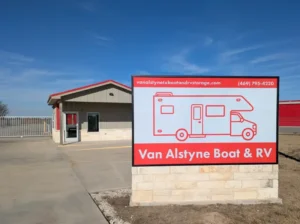
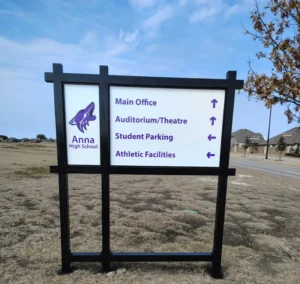
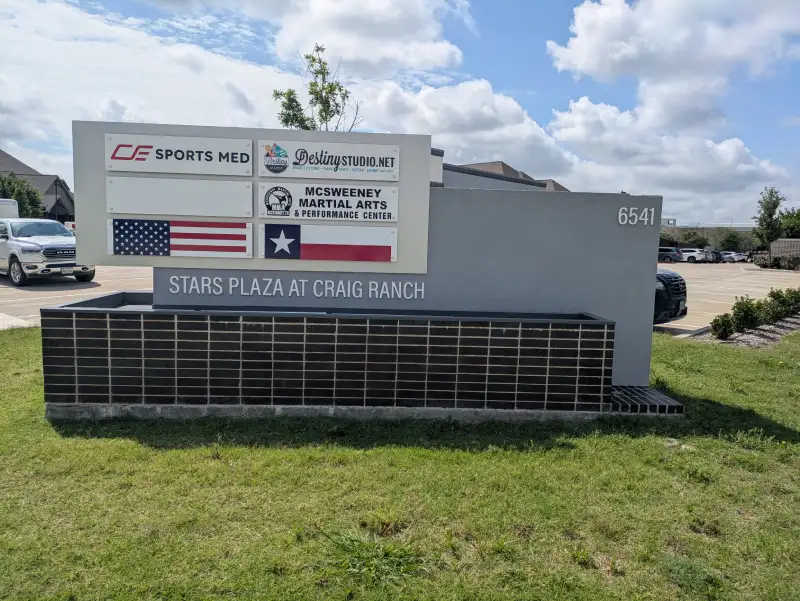
Ground-mounted signs tend to draw more enforcement attention than wall-mounted signs because they involve setback lines, height limits, and sometimes easement or utility conflicts that a building-mounted sign never touches. A monument sign built two feet closer to the property line than a city allows, or one that exceeds the height cap for its zoning district, is far more visible to an inspector driving the corridor than a facade sign would be. Before fabricating any monument signs for your commercial property, we pull the applicable setback and height requirements for the specific address, because these numbers vary from one North Texas city to the next and sometimes from one zoning overlay to another within the same city.
MAX HEIGHT
│
│
┌──────────┐
│ MONUMENT │
│ SIGN │
└──────────┘
│
─────────────┼──────────────── Property Line
<– Setback –>
Monument and Ground Signs Draw the Most Scrutiny
Ground-mounted signs tend to draw more enforcement attention than wall-mounted signs because they involve setback lines, height limits, and sometimes easement or utility conflicts that a building-mounted sign never touches. A monument sign built two feet closer to the property line than a city allows, or one that exceeds the height cap for its zoning district, is far more visible to an inspector driving the corridor than a facade sign would be. Before fabricating any monument signs for your commercial property, we pull the applicable setback and height requirements for the specific address, because these numbers vary from one North Texas city to the next and sometimes from one zoning overlay to another within the same city.
Permit Requirements Are Not the Same From City to City
One of the more common misconceptions we run into is the assumption that a sign permit process works the same way across North Texas. It does not. McKinney, Plano, Frisco, and Dallas each maintain their own sign ordinance, their own submittal requirements, and their own review timelines, and a sign type that sails through approval in one city can require a variance in another a few miles away. A business relocating or opening a second location often assumes the permit process will mirror what worked the first time, only to find the new city requires a structural engineer’s stamp, a different setback calculation, or a separate electrical permit for the same type of illuminated sign. Confirming the specific requirements for the exact address, rather than assuming based on a previous project, is the step that prevents an unpermitted sign from happening by accident rather than by choice.
What to Do If You Already Have an Unpermitted Sign
If a sign went up without a permit, whether from a previous tenant, a contractor who skipped the step, or a rush to open on time, the fastest path forward is usually to get ahead of enforcement rather than wait for a notice. Pulling the property’s permit history, confirming what the current sign code actually requires at that address, and applying for retroactive approval before a complaint triggers a formal violation puts the business in a stronger position than reacting after the fact. Some cities are more willing to work with an owner who self-reports than one responding to a citation. It is a conversation worth having with a fabricator who pulls permits regularly in the specific city where the property sits.
A sign that looks fine sitting on a building can still be sitting on an open code violation. The cost of confirming a permit before installation is almost always lower than the cost of resolving one after the fact, whether that resolution is a fine, a retroactive application, or a removal order, and it is a fraction of what an insurance denial after a sign failure could cost. If there is any uncertainty about whether an existing sign on a North Texas property was ever properly permitted, that is worth checking before it becomes someone else’s problem during a future upgrade or a future tenant’s lease negotiation.
Frequently Asked Questions
What happens if you install a sign without a permit in Texas?
Installing a sign without a permit in Texas typically triggers a notice of violation, giving the business a window of 10 to 30 days to remove the sign or apply for a permit retroactively. Missing that window can lead to daily fines, reinspection fees, and in some cases a city-ordered removal.
How much is the fine for an unpermitted sign in Texas?
Fine amounts vary by city, but most North Texas municipalities charge a daily fine that accrues until the violation is resolved, plus a reinspection fee each time an inspector has to return to the site. Some cities also charge more for a retroactive permit than the original permit fee would have cost.
Can I get a retroactive sign permit in Texas?
In many cases yes, but a retroactive permit is not guaranteed and is usually reviewed more strictly than a standard application. If the sign doesn’t meet current code, which changes more often than most business owners expect, the retroactive permit can be denied and removal becomes the only option.
Do all exterior signs need a permit in Texas?
Most exterior signs, including channel letters, monument signs, pylon signs, and illuminated signs, require a permit in North Texas cities, though specific exemptions vary by jurisdiction. Ground-mounted signs like monument and pylon signs typically face the most scrutiny due to setback and height restrictions.
How do I know if an existing sign on my building was ever permitted?
The property’s permit history can be requested directly from the city’s building or planning department using the address. This step is worth taking before any sign upgrade, since an unresolved violation from a previous tenant can delay approval of a new permit.
Does an unpermitted sign affect my business insurance?
It can. If an unpermitted sign fails or causes damage, an insurer can point to the missing permit as grounds to deny or limit a claim, since the structure was never verified against wind load or mounting standards. Commercial leases also typically make the tenant responsible for anything attached to the building, permitted or not.