
A trade show gives you a few seconds to catch an attendee’s eye as they walk the aisle, and your display does most of that work. Choosing the right trade show displays in Texas means balancing visual impact, portability, budget, and lead time so your booth looks professional and ships on schedule. With fall trade show season approaching, North Texas businesses in Plano, Frisco, and McKinney should plan booth graphics now rather than scrambling the week before. This guide covers the main display types and how to order the right package.
The Most Common Trade Show Display Types
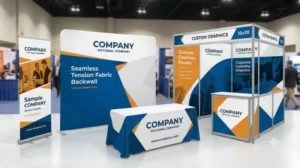
Trade show displays range from a single banner to a full modular booth. Most businesses build a package from a few of these core pieces, matched to their booth size and budget.
Retractable Banner Stands
Retractable, or roll-up, banner stands are the workhorse of trade shows. The graphic pulls up from a base and retracts back into it for transport, setting up in seconds with no tools. They are affordable, lightweight, and easy to update, making them ideal for first-time exhibitors, tabletop setups, and businesses that need several signs across a booth.
Tension Fabric Displays
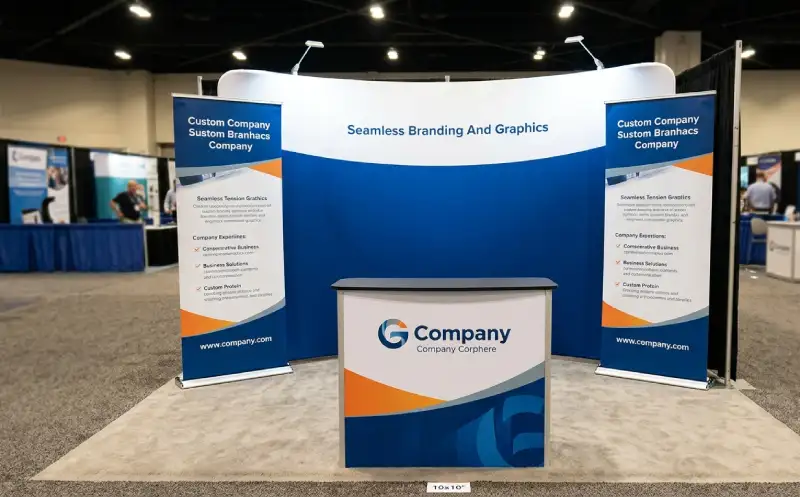
Tension fabric displays stretch a printed fabric graphic over a lightweight aluminum frame for a large, seamless, high-impact backdrop. They pack down into a compact case, set up quickly, and the fabric graphics are wrinkle-resistant and machine-washable. These are the go-to for a polished booth back wall and are easy to reship for repeat shows.
Table Throws and Runners
A printed table throw covers the standard exhibitor table with your branding, turning a plain surface into a branded display. They are inexpensive, fold flat, and pair with banner stands for a complete tabletop presence at smaller shows.
Modular Booth Systems
Modular booths combine frames, panels, counters, lighting, and fabric graphics into a configurable exhibit for larger 10×10, 10×20, or island spaces. They cost more but scale across shows and different booth sizes, giving established exhibitors a substantial, custom presence.
Match the Display to Your Booth and Goals
The right package depends on your space and objective. For a tabletop or first show, a retractable banner and a printed table throw deliver a clean, professional look on a modest budget. For a standard 10×10 inline booth, a tension fabric back wall plus a couple of banner stands and a branded counter is the reliable workhorse setup. For a larger island or a brand that exhibits often, a modular system pays off across multiple events. Decide your goal first, whether it is lead capture, product demos, or brand awareness, because it shapes how much open space, counter room, and messaging you need.
Portability and Reuse
If your business exhibits at more than one show a year, portability and durability matter as much as looks. Retractable stands and tension fabric displays are built to travel, packing into wheeled cases that ship easily and set up without a crew. Fabric graphics resist wrinkles and can be washed, so they look fresh show after show. When you plan for reuse, order graphics that stay current, keeping dated event names or pricing on separate, easily replaced pieces so the core display keeps working for years. And if you haul your booth between shows yourself, vehicle wraps for travel between shows keep your brand visible on the road too.
Lead Times and Ordering Ahead
Lead time is the detail that trips up exhibitors most. Custom-printed displays need time for design, proofing, printing, and hardware assembly, and rushing any of those steps risks quality or a missed ship date. Fall is peak trade show season, so print schedules fill up and standard timelines get tighter. Order several weeks ahead of your event so there is room to review a proof and make revisions without paying rush fees. Building in that buffer is the single easiest way to guarantee your booth is ready.
How to Brief a Sign Company for a Booth Package
A clear brief gets you the right booth faster. Tell your sign partner four things: your booth size and configuration, your event date and location, your goal for the show, and your brand assets, including a vector logo and brand colors. Share any show-provided booth specifications, since venues set rules on height, hanging signs, and setup. From there, event signs for your next event can be specified as a coordinated package, back wall, banners, table throw, and counter, so everything matches and arrives together and stays consistent with the interior signs that match your booth branding back at your office. The more context you provide up front, the less back-and-forth and the better the result.
Designing Booth Graphics That Attract Attendees
On a crowded show floor, your booth has a few seconds to communicate who you are and why someone should stop. The most common design mistake is cramming too much text onto the back wall. Attendees read your booth while walking, so lead with a short, benefit-driven headline that can be understood from several feet away, and let your logo and a single strong image carry the brand. Save the detail for conversation, printed handouts, or a screen inside the booth.
Contrast and hierarchy do the heavy lifting. Keep the headline high on the back wall where it clears the heads of people standing in the booth, use your brand colors boldly, and make sure your company name is readable from the aisle. A clean, confident booth almost always outperforms a busy one, because it invites people in rather than overwhelming them.
Setting a Realistic Trade Show Budget
Booth graphics are one line in a larger show budget, and planning the whole picture prevents surprises. Beyond the displays themselves, factor in shipping to and from the venue, any drayage or handling fees the show charges, electrical and setup services, and the cost of replacing dated graphics between events. This is exactly why keeping event-specific details on separate, inexpensive pieces pays off: you refresh the small parts instead of reprinting the entire booth for each show.
For businesses that exhibit regularly, investing a bit more up front in durable, reusable displays lowers the cost per show over time. A quality tension fabric back wall and sturdy banner stands that survive many events cost less per appearance than cheaper displays that look worn after one season. Match the spend to how often you exhibit, and your booth becomes an asset you reuse rather than an expense you repeat.
With fall trade show season approaching, the North Texas businesses that show up looking sharp are the ones that started early. Decide your booth size and goal, choose the mix of displays that fits both, brief your sign company with complete brand assets, and order with enough runway to review a proof without rush fees. Do that, and your booth arrives on time, looks professional, and works just as hard at the next show as it did at the first. Keeping the booth aligned with your storefront, right down to your window graphics for your retail location, reinforces one recognizable brand everywhere customers meet you.
Frequently Asked Questions About Trade Show Displays
What is the best trade show display for a first-time exhibitor?
For a first show, a retractable banner stand paired with a printed table throw gives a clean, professional look at a modest cost. Both set up in seconds without tools and are easy to transport and update for future events.
How far in advance should I order trade show displays?
Order several weeks before your event so there is time for design, proofing, printing, and shipping without rush fees. Lead times tighten during peak fall trade show season, so earlier is always safer.
Are tension fabric displays reusable for multiple shows?
Yes. Tension fabric displays pack into compact cases, set up quickly, and the graphics are wrinkle-resistant and washable, so they look fresh across many shows. Keeping event-specific details on separate pieces makes reuse even easier.
What information does a sign company need to build my booth?
Provide your booth size and layout, event date and location, your goal for the show, your vector logo and brand colors, and any show-provided booth specifications. This lets the sign company deliver a coordinated, on-spec package.