
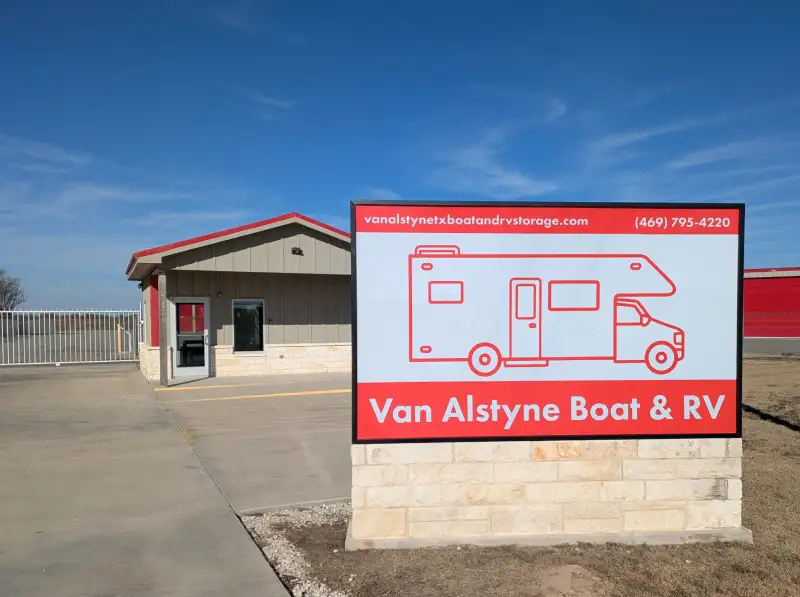
A monument sign is often the first thing a customer sees before they ever reach your door. For commercial properties across McKinney, Plano, and Frisco, a well-built monument sign anchors the address, lists tenants, and signals the quality of the businesses inside, complementing each tenant’s own exterior signs for your storefront at the door. But monument signs raise questions that trip up both owners and tenants: which type fits the property, what materials last, how illumination works, and who is responsible for the cost. This guide answers all of it in plain language.
What Is a Monument Sign?
A monument sign is a low-profile, freestanding ground sign built on a solid base rather than mounted on poles. It sits close to the ground at the property entrance or along the street frontage, giving a substantial, permanent look that pylon signs for high-visibility locations cannot match. Because it reads at both driving and walking speed, it works as the primary identifier for the property and its tenants.
Monument signs are governed by both city ordinance and, in leased properties, the landlord’s sign criteria. Height, area, and placement limits vary by city, so the design has to satisfy local code from the start.
Single-Tenant vs. Multi-Tenant Monument Signs
The first decision is how many businesses the sign will identify, and it changes everything about the layout.
Single-Tenant Monument Signs
A single-tenant monument sign identifies one business, typically an owner-occupied building, a bank, a medical office, or a restaurant. The full sign face is dedicated to one brand, so the logo and name can be large and the design can match the building architecture closely.
Multi-Tenant Directory Monument Signs
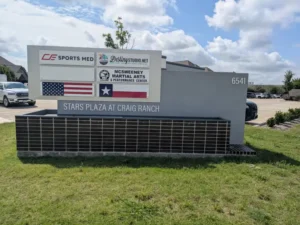
A multi-tenant monument sign, also called a directory sign, lists several businesses on one structure, usually with a header for the property name and interchangeable tenant panels below. These require careful planning so every tenant panel is legible and the panels can be swapped as tenants change without rebuilding the whole sign.
Material Options and How They Perform
Monument signs are built to last for years in the open, so material choice drives both appearance and longevity.
Aluminum is the workhorse for sign faces and cabinets because it resists rust and holds paint well. HDU (high-density urethane) foam is popular for carved and dimensional monument faces because it shapes cleanly and never rots, making it ideal for detailed logos and architectural looks. Brick- or stone-faced bases match the sign to the building or surrounding hardscape and give a high-end, permanent impression that developers favor for premium properties. Many monument signs combine an aluminum or HDU cabinet on top of a masonry base to balance durability and design. A good sign partner can recommend the right sign materials for your project based on the property and budget.
Illumination Choices
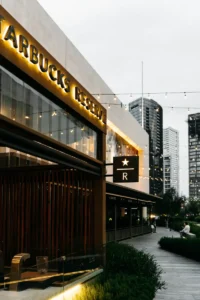
Illumination determines whether your sign works after dark, which matters for evening retail and dining traffic. Internally illuminated cabinets light the sign face from within for even, glowing panels, common on multi-tenant directories. Push-through acrylic letters give a crisp, upscale glow where the letters light while the background stays dark. External spot or ground lighting washes the sign face and pairs well with masonry monuments and carved HDU faces. LED is the standard light source today for its low energy use and long life. Confirm early whether your city and landlord allow illumination and, if so, what type, since some corridors restrict brightness.
Foundation, Setback, and Permit Requirements
Monument signs are permanent structures, so they require an engineered foundation and a city permit. North Texas cities set minimum setbacks from property lines, rights-of-way, and driveways to protect sight lines for traffic, and they cap sign height and area. Corner properties often face additional visibility triangle rules. Skipping the permit or ignoring setbacks can force a costly relocation, so the site plan and foundation should be confirmed with the city before fabrication. Monument signs for your commercial property should be planned with these requirements in mind from day one.
Who Pays: Owner vs. Tenant Responsibility
Cost responsibility depends on the lease and the sign type. Typically the property owner provides and maintains the shared monument structure, especially multi-tenant directory signs, because it identifies the property as a whole. Tenants often pay for their individual panel, its design, and fabrication, and sometimes a share of maintenance through common area charges. For single-tenant, owner-occupied buildings, the owner carries the full cost. Always confirm in writing who owns the structure, who maintains it, and who pays to update panels when tenants change, because assumptions here lead to disputes later.
How Long a Monument Sign Takes to Build
A monument sign is a construction project, not an off-the-shelf purchase, so the timeline is longer than most owners expect. After the design is approved, the sign needs engineered drawings for the foundation, a city permit, and often a separate electrical permit if it is illuminated. Permitting alone can take several weeks in North Texas cities. Fabrication of the cabinet, faces, and any masonry base follows, and then the site work, pouring the foundation and installing the structure, adds more time and depends on weather.
Realistically, plan for a couple of months from approved design to installed sign, and longer if the base involves brick or stone masonry. Owners developing a new property should fold the monument sign into the overall construction schedule early so it is ready when the first tenants open, rather than treating it as a finishing touch added at the end.
Maintaining a Monument Sign Over Time
Because a monument sign sits at ground level in full view, its condition directly reflects on every business it represents. Faded faces, burned-out lighting, or a cracked base send the wrong message to arriving customers. Budget for periodic maintenance: LED components eventually need replacement, sign faces may need refreshing after years of UV exposure, and landscaping around the base has to be kept trimmed so it does not obscure the sign. For multi-tenant directories, plan a simple process for swapping tenant panels as businesses come and go, so vacant slots do not sit blank for months.
A well-maintained monument sign protects the value of the whole property. It is often the least expensive part of the site to keep looking sharp, and the one customers notice first.
Whether you are an owner planning a new property or a tenant deciding how your business appears on a shared sign, the smartest move is to plan the monument sign early and in writing. Confirm the type, materials, illumination, and cost responsibility before construction starts, and coordinate the permit and foundation with your site schedule. A monument sign is a long-term asset that greets every visitor for years, so the time spent planning it up front pays back every day it stands at your entrance.
Frequently Asked Questions About Commercial Monument Signs
What is the difference between a monument sign and a pylon sign?
A monument sign is low to the ground on a solid base, while a pylon sign is elevated on one or more poles for visibility from a distance or highway. Monument signs give a more permanent, upscale look; pylon signs prioritize long-range visibility.
How tall can a commercial monument sign be?
Maximum height is set by city ordinance and varies by location and street type in North Texas, commonly in the range of a few feet up to around eight feet for monument-style signs. Your sign company confirms the exact limit against local code before design.
Who is responsible for a multi-tenant monument sign?
Usually the property owner owns and maintains the shared structure, while each tenant pays for their own panel and its updates. The exact split should be spelled out in the lease and sign criteria.
Do monument signs require a permit in North Texas?
Yes. Monument signs are permanent structures that require a city sign permit and an engineered foundation, and they must meet setback and height rules. Planning the permit early prevents relocation and rework.