
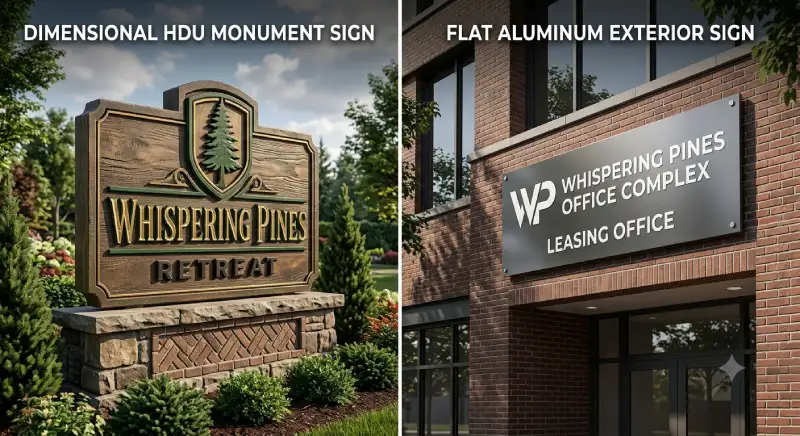
When you order a sign, the material underneath the paint and graphics matters as much as the design. The two most common choices, HDU foam and aluminum, behave very differently in cost, appearance, and how they hold up to Texas heat. Understanding HDU vs aluminum sign materials helps you ask the right questions and avoid paying for the wrong substrate. This guide compares them in plain language, written for business owners in North Texas, not for fabricators.
What Is HDU Foam?
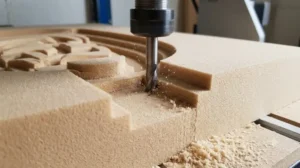
HDU, or high-density urethane, is a rigid closed-cell foam engineered specifically for signage. It carves and routs cleanly, which makes it the go-to material for dimensional and sculpted signs with logos, borders, and raised lettering. HDU does not rot, warp, or absorb water the way wood does, and it takes paint beautifully, so it delivers a rich, crafted look. It comes in different densities, with higher densities used for finer detail and greater durability.
What Is Aluminum?
Aluminum is a lightweight, rust-proof metal used for flat sign faces, cabinets, panels, and channel letter backs. It is the standard substrate for flat printed or vinyl-applied signs and for the structural parts of illuminated signs. Aluminum is strong, thin, and dimensionally stable, so it stays flat and holds up outdoors for years with minimal maintenance. Composite aluminum panels, two thin aluminum sheets bonded to a polyethylene core, are common for large flat signs because they resist bending.
Head-to-Head: The Trade-offs That Matter
Neither material is better across the board. Each wins in different situations, so the right choice depends on what the sign needs to do.
Appearance and Detail
HDU wins for dimensional, carved, and sculpted looks, including raised logos, beveled edges, and textured backgrounds. Aluminum wins for clean, flat, modern faces where the graphic or vinyl does the visual work. If you want depth and craftsmanship, HDU delivers; if you want sleek and flat, aluminum is the natural fit.
Weight and Installation
Aluminum is thin and light for flat applications, while a thick carved HDU sign can be bulkier but is still lighter than solid wood or metal of the same size. Both are manageable to install, though large HDU dimensional signs may need a sturdier mounting approach because of their depth.
Cost
Flat aluminum signs are usually more economical for straightforward, flat designs. HDU can cost more because the carving, sculpting, and multi-step painting are labor-intensive, but that cost buys a premium, dimensional result you cannot get from a flat panel. You are paying for craftsmanship, not just material.
Durability and Texas Heat
Both materials perform well outdoors in North Texas when finished correctly. Aluminum will not rust and stays stable in high heat, making it dependable for flat exterior signs and cabinets. HDU is UV-stable and will not rot, but its long-term performance depends heavily on a quality primer and paint system to protect the surface. With proper finishing, both last for years; with cheap finishing, HDU shows wear faster than aluminum.
Which Material Fits Which Sign
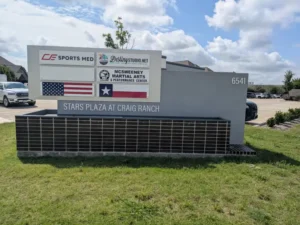
Match the material to the application. Choose HDU for monument signs for your commercial property, dimensional letters for your lobby or facade, carved logos, and any project where a crafted, three-dimensional look matters. Choose aluminum for flat exterior building signs, directional and parking signs, channel letter backs and cabinets, and large flat panels where clean printed graphics carry the message. Many premium signs combine both, an HDU dimensional face on an aluminum-framed structure, so you get the look of HDU with the strength of metal.
The right call also depends on budget and brand. A boutique or professional office that wants interior signs that make a strong first impression is often better served by HDU, while a retailer that needs bright, flat, illuminated signage will lean on aluminum. A good sign partner recommends the right sign materials for your project rather than defaulting to whatever is cheapest to produce.
Questions to Ask Before You Decide
Before approving a material, ask three things. First, is this sign interior or exterior, and how much direct sun will it take? Second, do I want a flat modern look or a dimensional carved look? Third, what primer and paint system protects the substrate, and what warranty comes with it? The answers point clearly to HDU, aluminum, or a combination, and they protect you from paying for a substrate that will not perform where your sign lives.
How Texas Weather Affects Each Material
North Texas is a demanding environment for signage. Summer surface temperatures on a west-facing sign can climb far higher than the air temperature, intense UV exposure fades pigments over time, and sudden hail and wind events stress any exterior sign. Aluminum handles heat and thermal cycling well because it does not absorb moisture and will not rust, though a dented aluminum face from hail is visible and hard to repair invisibly. HDU is dimensionally stable and immune to rot, but its performance in this climate is only as good as its coating; a quality primer and UV-resistant paint system is what keeps the surface from chalking or fading.
The practical takeaway is that material choice and finish quality matter together, not separately. A well-finished HDU sign and a properly coated aluminum sign will both last for years here, while a poorly finished version of either will disappoint. When you compare quotes, look past the material name and ask specifically about the coating system and warranty, because that is where longevity is won or lost in the Texas sun.
Getting an Accurate Quote
When you request a quote, the material is only one line item. The real cost is driven by design complexity, size, finishing, and whether the sign is illuminated. A flat aluminum panel with printed vinyl is straightforward to price. A carved HDU monument face with multiple paint colors, a clear coat, and dimensional elements involves far more labor, which is why two signs of the same size can differ significantly in price. To compare quotes fairly, make sure each one specifies the substrate, the finish system, the warranty, and what installation includes. That way you are comparing complete signs, not just raw materials, and you avoid the false economy of a cheap substrate that needs replacing years too early.
In the end, there is no single best sign material, only the best material for a specific job. Aluminum earns its place on flat, modern, and illuminated signs where clean graphics do the work, while HDU shines on dimensional, carved pieces that need to feel crafted and premium. Tell your sign partner where the sign will live, how it should look, and how long you expect it to last, and the right substrate becomes clear. Matching the material to the mission is what keeps your sign looking sharp for years and protects the money you put into it.
Frequently Asked Questions About HDU vs Aluminum Sign Materials
Is HDU or aluminum better for outdoor signs in Texas?
Both perform well outdoors in Texas when finished correctly. Aluminum is rust-proof and heat-stable for flat signs and cabinets, while HDU is UV-stable and rot-proof and excels at dimensional, carved designs as long as it has a quality paint system.
Which sign material is more affordable?
Flat aluminum signs are generally more economical for simple flat designs. HDU costs more because of the carving and multi-step painting labor, but it delivers a dimensional, premium look that flat aluminum cannot match.
Does HDU foam hold up as long as aluminum?
With a proper primer and paint system, HDU lasts many years outdoors and resists rot and UV damage. The finish is what determines its lifespan; poorly finished HDU wears faster than aluminum, while well-finished HDU is highly durable.
Can a single sign use both HDU and aluminum?
Yes, and premium signs often do. A common approach is an HDU dimensional or carved face mounted on an aluminum-framed structure, combining the crafted look of HDU with the strength and stability of metal.