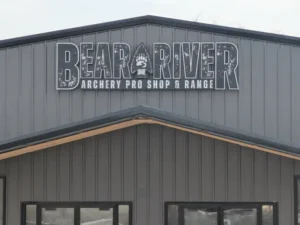

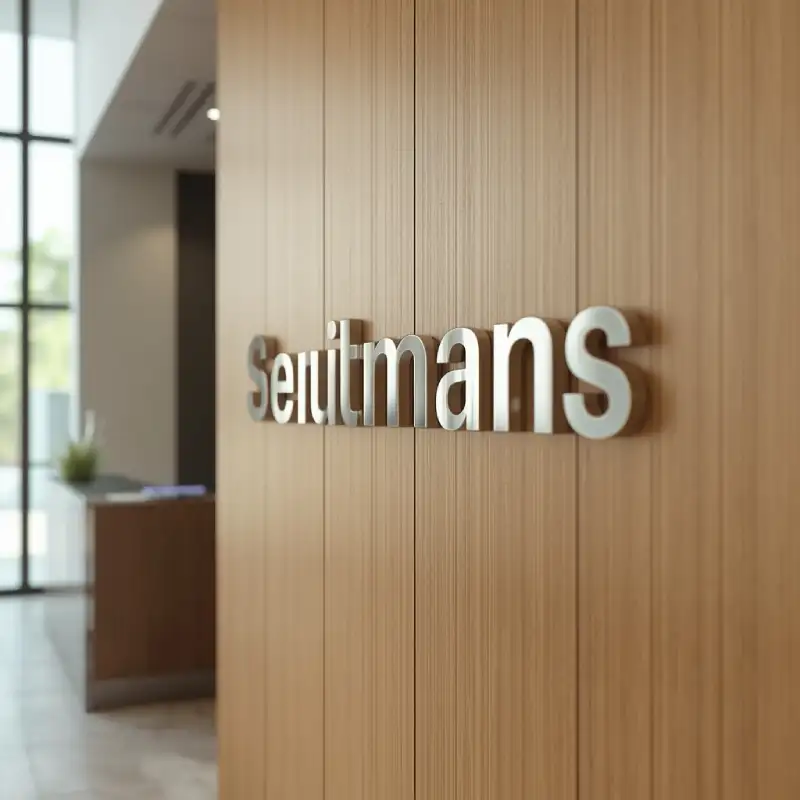
A lobby sign and a facade sign can carry the same logo and font and still need completely different materials. The dimensional letters material options worth considering fall into five categories: acrylic, flat cut aluminum, stainless steel, PVC, and cast metal. Acrylic and PVC dominate interior lobby walls because they are light and cheap to mount. Aluminum, stainless, and cast metal go on facades because they survive sun, rain, and the daily expansion of the wall behind them.
The mistake we see most often is a material picked from a photo before anyone looked at the wall it has to hang on. Reverse that order and the decision gets easier.
Dimensional Letters Material Options at a Glance
| Material | Best For | Interior | Exterior | Relative Cost |
| Acrylic | Lobby and reception walls, feature walls | Excellent | Fair | Low to medium |
| Flat cut aluminum | Building facades, modern interiors | Excellent | Excellent | Medium |
| Stainless steel | Premium lobbies, professional facades | Excellent | Excellent | High |
| PVC | Interior branding, budget and temporary | Good | Poor | Low |
| Cast metal | Institutional, plaques, dedication walls | Excellent | Excellent | High |
Treat it as a filter, not an answer.
Start With the Wall, Not With the Letter
Every dimensional letter transfers its weight into whatever is behind it. That one fact eliminates more options than budget does, which is why a site visit comes first.
Drywall and Glass Lobby Walls
Standard drywall with no blocking behind it holds very little. Half inch acrylic at four inches tall is fine on studs and anchors. The same run in cast bronze is not, unless someone opens the wall and adds backing. If a tenant improvement is underway, plywood blocking behind the future sign wall costs almost nothing and keeps metal on the table.
Glass changes the math entirely. Nothing gets drilled, so letters stand off on barrels through a mounted panel, and clear acrylic with a polished edge is the usual answer.
Brick, Stone, and EIFS Facades
Brick and stone hold fasteners well but punish sloppy layout, since a misplaced hole in stone is permanent. Letters are usually stud mounted into mortar joints, not the face of the brick.
EIFS, the synthetic stucco on many newer North Texas office buildings, surprises people. It is foam over sheathing, so it carries almost no load on its own. Facade letters on EIFS need fasteners that reach real structure behind the foam, plus sealed penetrations so water does not track in. Lighter aluminum wins here far more often than heavy cast metal.
The Five Material Options and Where Each Belongs
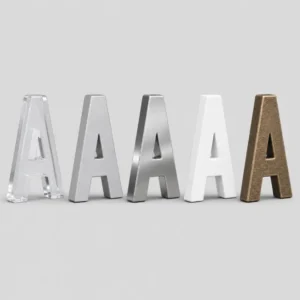
Dimensional letters are three dimensional sign elements cut, cast, or fabricated from solid material and mounted so they stand off a wall.
Acrylic
Cut acrylic is the workhorse of interior lobby signage. It takes color through the sheet or on a painted face and polishes to a glass like edge. It is light enough for drywall and holds fine detail in thin serifs and small logo elements. Outdoors it is serviceable, not ideal, since UV dulls a painted face sooner than anodized metal. For a reception wall, acrylic gives the most visual quality per dollar.
Flat Cut Aluminum
Aluminum is the default for exterior facade letters and a strong interior choice when a client wants a metal read. Cut from plate, edges stay crisp, and it can be painted, anodized, or brushed. It does not rust and it tolerates the thermal cycling a west facing wall sees in July. Thicker plate throws a heavier shadow line and reads better from a parking lot.
Stainless Steel
Stainless is what buyers choose when the material itself is the message. It signals permanence in a way paint cannot imitate. It is heavier and pricier than aluminum, and a mirror polish shows every fingerprint at hand height, so brushed finishes survive real traffic better. The practical constraint is weight and the wall behind it.
PVC
Expanded PVC is inexpensive, easy to cut, and light. It is right for interior wall branding, back of house identification, and budget lobby signs. It is wrong for any surface in direct sun: heat and UV cause fading and warping, and a warped letter cannot be straightened. If someone quotes PVC for a south facing facade, ask why it is there.
Cast Metal
Cast aluminum and bronze are poured into molds rather than cut from sheet, giving a softer edge, a deeper face profile, and finishes that gain character over time. They suit institutional buildings, plaques, and dedication walls. Tradeoffs are cost, weight, lead time, and font limits, since some faces exist only as cast patterns. Gemini publishes a lifetime guarantee on its letter lines, which says something about expected service life.
How Lobby Lighting Changes the Decision
A wall of south facing glass will blow out a light colored letter on a light colored wall by mid morning. Contrast then has to come from the material, which is where brushed metal and dark painted aluminum earn their price. A dim lobby does the opposite: polished metal goes flat and gray, while a painted acrylic face with a clean shadow line stays legible. With no natural light and no sign lighting planned, price a halo lit set first.
What North Texas Heat and Sun Do to Facade Letters
Facade signage in Van Alstyne, McKinney, and Plano faces long stretches of direct summer sun on walls that run hotter than the air around them.
Dark paint fades faster on a west facing elevation, so one letter set can age unevenly on two sides of the same building. Plastic softens as surface temperature climbs, which is why PVC stays inside. Every material expands and contracts daily, so hardware needs tolerance for that movement. Our breakdown of HDU foam versus aluminum sign materials covers the wider durability picture.
Mounting Methods That Drive the Material Choice
Mounting is not a step that follows material selection: the two constrain each other.
Flush mount sets the letter tight to the wall with adhesive or short studs: cleanest look, needs a flat surface, rules out most brick. Stud mount, also called projected mount, holds the letter off the wall on threaded studs and spacers, creating a shadow line and hiding wall irregularity. It is the standard for exterior metal. Rosette mount uses decorative sleeves at each stud and pairs naturally with cast metal.
A full size template, verified on site before the first hole, separates a clean dimensional letter installation from a wall with extra holes in it.
Where the Budget Actually Goes
Buyers assume material is the biggest line on the quote. Indoors it often is not: fabrication complexity, finish, letter height, count, and install labor usually outweigh substrate cost. Outdoors, access dominates. Letters above the first floor need a lift, a permit, and sometimes a lane closure, and that cost does not care which material you picked. Texas treats facade signage as permitted work. In multi tenant buildings, settle material alongside the directory and wayfinding plan.
Frequently Asked Questions About Dimensional Letters Material Options
What material is best for dimensional letters in an office lobby?
Cut acrylic is the best default for office lobbies. It is light enough for standard drywall, holds fine detail, and costs less than metal at the same size. Choose brushed aluminum or stainless when the client wants a metal read, or when strong light would wash out a painted face.
Can PVC letters be used outdoors?
PVC should not be used for permanent exterior signage in direct sun. Heat and UV cause fading and warping, and warped letters cannot be corrected. Aluminum, stainless steel, or cast metal are the right choices outdoors.
How thick should dimensional letters be?
Thickness follows viewing distance and the shadow line you want. Interior lobby letters read well at roughly a quarter inch to one inch of depth. Facade letters seen from a parking lot need more, and taller letters need more depth to look proportional.
Do dimensional letters have to meet ADA requirements?
Branding letters on a lobby feature wall or building facade are not ADA signage. Signs identifying permanent rooms and spaces are, and those carry rules on character height, contrast, non glare finish, tactile characters, and Braille under the ADA Standards for Accessible Design [https://www.ada.gov/law-and-regs/design-standards/2010-stds/].
How long do metal dimensional letters last?
Aluminum, stainless steel, and cast metal letters are permanent architectural signage and routinely stay in service well over a decade outdoors. Paint finish, not the metal, usually shows age first on a sun exposed elevation. Major manufacturers back these lines with lifetime guarantees.
Choosing With Confidence
Let the wall and the light narrow the field, then pick the material that fits the look and budget inside what is left. Acrylic and PVC indoors, metal on facades, mounting chosen alongside the substrate.
Weighing options for a lobby or facade in North Texas? We can walk the space, check what the wall will hold, and quote the real choices side by side. See our custom dimensional letter.