Key Takeaways
- A church sign system has two jobs: help people find the campus from the road, and help first-time guests find the right door, room, and restroom once they arrive.
- Plan exterior signs first (main ID sign, entrance and parking signs), then the guest path inside (welcome area, kids check-in, worship center, restrooms, exits).
- Permanent signs such as monument signs usually need design, a city permit, and fabrication time, so they rarely come together in a few weeks. Easter 2027 falls on March 28, which makes winter a good time to start.
- Federal ADA rules exempt religious organizations, but Texas accessibility rules treat parts of a church building differently. Check with your architect before you skip tactile room signs.
Ask any greeter team what first-time guests struggle with and you will hear the same list: Where do I park? Which door is the entrance? Where do I take my kids? Where are the restrooms? Most of those questions can be answered before a guest ever has to ask a person.
Church signage is the system of exterior and interior signs that identifies a place of worship from the street and guides members and guests around its campus. A good system starts at the road with a main identification sign, continues through the parking lot with directional signs, and carries guests inside to the welcome area, children’s check-in, worship center, and restrooms without guesswork.
North Texas makes this especially important. Collin and Grayson counties keep adding neighborhoods, and many churches here have grown from one building to a campus with an education wing, a gym, and overflow parking. Every new building adds a decision point where a visitor can get lost. This guide covers which signs a church actually needs, how to plan them in the right order, what to know about permits and digital message signs in North Texas cities, and how accessibility rules apply to church buildings in Texas.
Why Church Signs Matter More Than Most Buildings
A retail store can count on customers who already know what they came to buy. A church has to welcome people who may be walking in for the first time in years, often with children, often a little anxious, and often running a few minutes late. Confusing parking or an unmarked entrance does not just slow them down. It can be the reason they do not come back.
Members stop noticing the gaps because they know the building by heart. A guest has none of that memory. That is why the most useful planning step is to walk your campus as if you have never been there, starting from the nearest main road, and write down every place where you would have to stop and guess.
The Exterior Signs Every Church Should Plan
The main identification sign
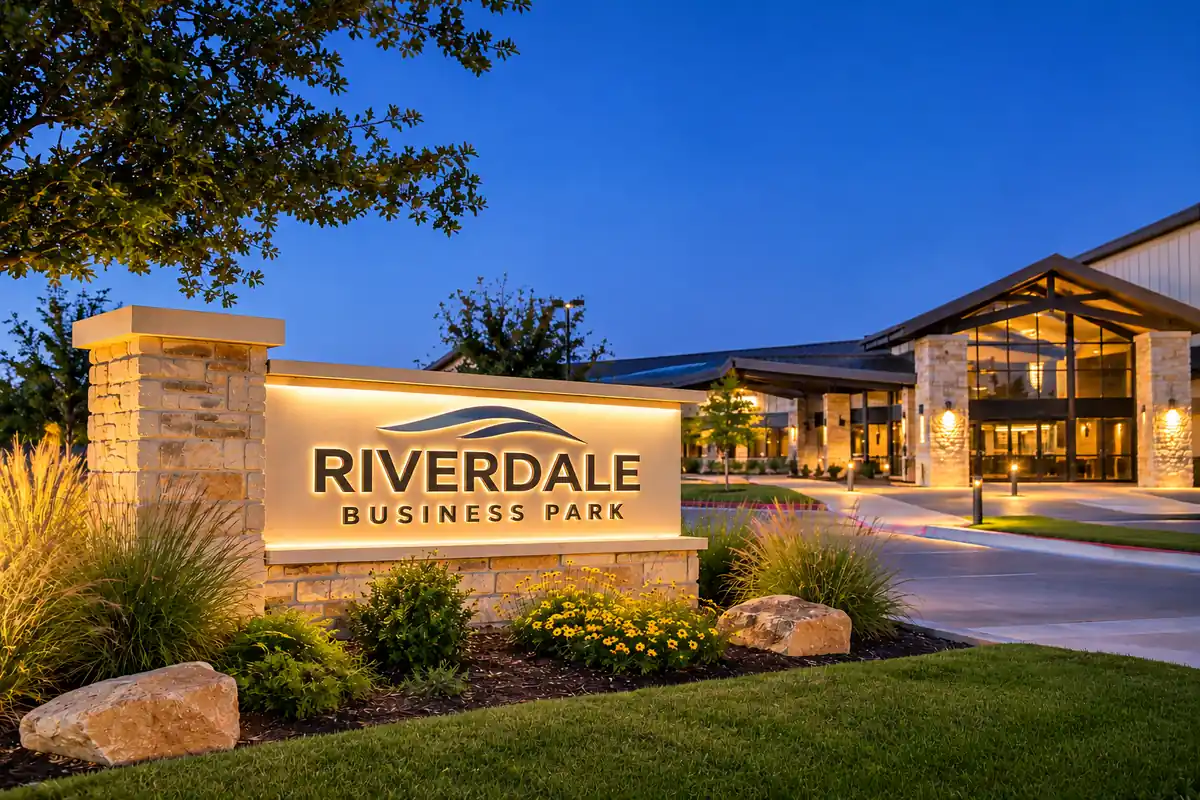
The main ID sign is your church’s front door from the road. For most churches in North Texas, that means a monument sign near the main entrance drive: a low, solid sign on a masonry or aluminum base with the church name, logo, and sometimes service times.
The name should be readable at the speed traffic actually moves on your road. A sign facing a 45 mph arterial needs larger letters than one on a neighborhood street. Keep the permanent copy short: name, logo, and perhaps a short line like a website. Service times change, so if you want to show them, use a replaceable panel or a changeable section instead of building them into the masonry.
Lighting deserves real thought. Many churches host evening services, Wednesday programs, and Christmas Eve services after dark. An unlit sign disappears from 5:30 p.m. onward in December. External ground lighting is the simpler option; internal LED illumination costs more but reads better at night.
Changeable copy and digital message signs
Many churches want a reader board or an electronic message center (EMC) to promote events. These can work well, but they come with more rules than a static sign. Cities across the Dallas Fort Worth area regulate how often messages can change, how bright the display can be, and where digital signs are allowed at all. Fort Worth, for example, only allows electronic changeable copy signs by special exception in certain districts, limits changeable copy to 25 percent of the sign face, and does not allow messages to change faster than once every 20 seconds. Rules in McKinney, Frisco, Prosper, or Sherman will differ, so confirm your city’s code before you budget for one.
Digital signs are also a real investment. Angi’s commercial sign data puts digital church signs and marquees at roughly $5,000 to $50,000, depending on size and resolution. For many congregations, a well-designed static monument with a manual changeable panel communicates just as clearly for much less money.
Entrance, parking, and campus directional signs
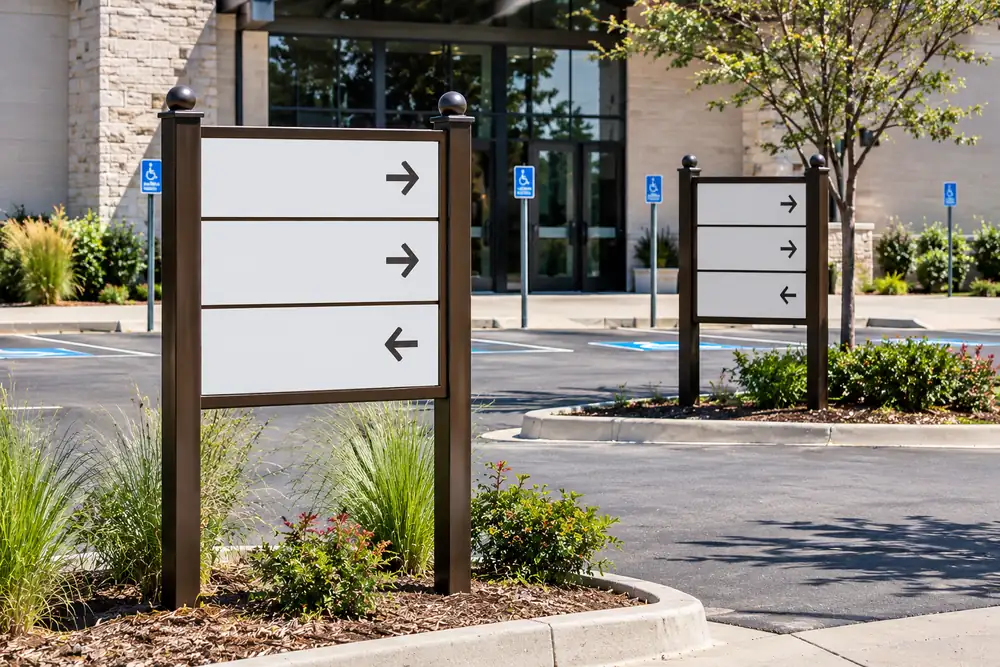
Once a guest turns in, the next questions are where to park and which door to use. Plan these exterior directional and wayfinding signs in this order:
- Guest parking. Reserved first-time guest spaces near the main entrance send a clear welcome message.
- Main entrance. Identify the door guests should use, especially if your building has several glass entries that look the same.
- Children’s entrance or check-in. If kids check in through a separate door, sign it from the parking lot.
- Accessible parking and entrances. Make the accessible route obvious from the parking spaces to the door.
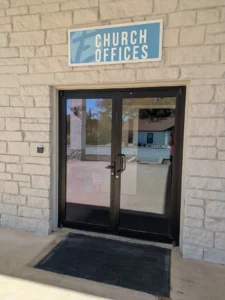
- Other buildings. Label the gym, student building, fellowship hall, and offices on the buildings themselves and on the paths between them.
Post and panel signs are a common choice for these campus signs because they are cost effective, easy to read at walking and parking lot speeds, and simple to update with new panels when a ministry moves buildings.
Interior Church Signs: Following the Guest Path
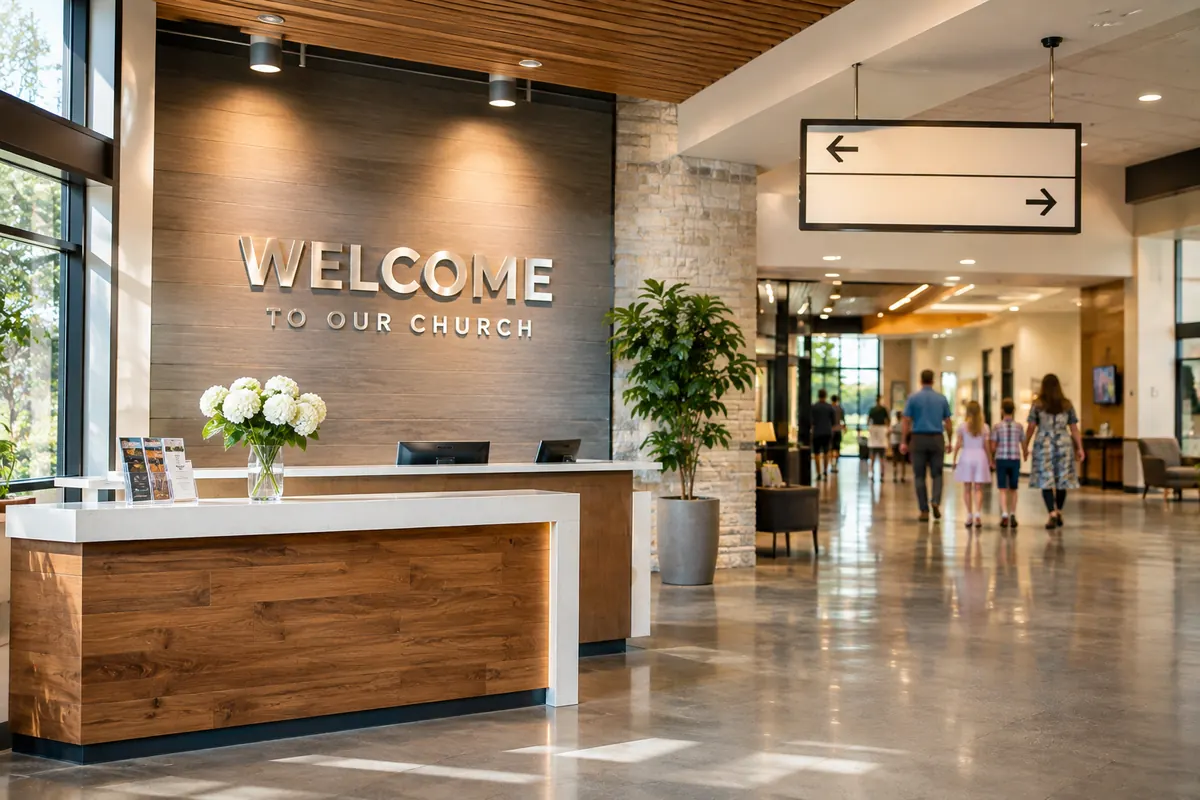
Inside, think in terms of the guest path rather than the floor plan. A first-time family usually needs these destinations, roughly in this order:
- Welcome or information center. This should be visible the moment someone walks in, ideally with an overhead or wall sign.
- Children’s check-in. Parents want to find this fast and feel confident it is secure.
- Restrooms. Sign them from the lobby, not just at the door.
- Worship center or sanctuary. Obvious to members, not always to guests in a multi-purpose building.
- Classrooms and adult groups. Room names or numbers that match what is printed in the bulletin or app.
- Exits back to parking. Often forgotten. After the service, guests should be able to find their way back to the right lot.
Brand the space while you are at it. Dimensional letters behind the welcome desk, wall graphics in a kids’ wing, or a mission statement in the lobby help a building feel like your church and not a rented facility. Keep wayfinding signs consistent in color, font, and arrow style so guests learn the system after the first sign.
Recognition signage belongs in the plan too. Donor walls, building dedication plaques, and memorial plaques are part of most church buildings, and they look best when they share the same materials and finishes as the rest of the sign system. Our custom plaques are built to match.
ADA and Accessibility Rules for Churches in Texas
This is the part most churches get wrong in one direction or the other. Here is what the rules say, in plain terms.
At the federal level, Title III of the Americans with Disabilities Act exempts religious organizations and entities they control, including places of worship. The ADA National Network confirms that this exemption covers all of a religious entity’s facilities and activities, whether religious or secular.
Texas has its own accessibility law, the Architectural Barriers Act in Chapter 469 of the Texas Government Code, which uses the Texas Accessibility Standards. According to the Texas Governor’s Committee on People with Disabilities, the state law does not apply to places primarily used for religious rituals within a religious organization’s building, but other parts of the building must still comply. In practice, that means the sanctuary may be treated differently from classrooms, offices, fellowship halls, or a gym.
There are also situations where a church building houses a covered use, such as a daycare or school leased to a separate operator. Those spaces can carry their own requirements.
Our recommendation is simple. Ask your architect or a Registered Accessibility Specialist which areas of your project are covered before you finalize the sign schedule. Even where tactile and Braille room signs are not legally required, they make your building usable for members and guests with vision impairments. Our ADA and Braille signs follow the same mounting height and tactile standards used in commercial buildings, and our article on ADA sign requirements in Texas explains those standards in detail.
Permits, Timing, and the Church Calendar
Permanent exterior signs usually need a city sign permit, and freestanding signs often need engineered foundations, a scaled site plan, and electrical details. Cities in Collin County also tend to regulate monument sign height, area, setback from the street, and base materials. If your church sits in a residential zoning district, as many do, the allowed sign size may be smaller than what a commercial property next door can install.
Build your timeline backward from the dates that matter most to your congregation. Christmas Eve is too close to plan a new permanent monument sign from scratch, but it is a good moment to add temporary help: banners, A-frame signs, and parking lot directionals for the guests who come once a year. Our post on event signs for holiday events covers the temporary side in more detail.
Easter 2027 falls on Sunday, March 28. If you want a new main sign or a refreshed interior wayfinding system in place for Easter guests, starting design in December or January leaves room for congregational approval, permitting, and fabrication. Building committees and church boards often add a review step, so give that time on the calendar too.
Common Church Sign Mistakes
- Too much text on the main sign. Drivers can only read a few words. Put details on a website or a changeable panel.
- No lighting. Evening programs and winter services happen in the dark.
- Insider names. “The Upper Room” or “Building C” means nothing to a guest. Pair ministry names with plain words such as “Students” or “Kids Check-In.”
- Forgetting the way out. Exit and parking signs matter as much as entrance signs after a crowded service.
- Mixed styles. Signs added one at a time over twenty years look like twenty different churches. A planned system can replace them in phases.
- Skipping the permit. A church is not exempt from local sign permits, and removing a non-compliant sign costs more than permitting it the first time.
Frequently Asked Questions About Church Signs
What signs does a church need?
Most churches need a main identification sign at the road, parking and entrance signs, building identification on a multi-building campus, and interior directional signs for the welcome area, children’s check-in, worship center, classrooms, and restrooms. Accessible room signs and exit signs complete the system.
How much does a church sign cost?
Cost depends on the sign type, size, materials, and lighting. Monument signs commonly run $5,000 to $20,000 or more installed according to HomeGuide, while digital church signs and marquees can run about $5,000 to $50,000 according to Angi. Interior directional signs cost much less per sign.
Do churches need a permit for a sign in Texas?
Yes, in most North Texas cities. Permanent exterior signs, especially freestanding and lighted signs, usually require a city sign permit regardless of who owns the property. Size and type limits can be stricter in residential zoning districts.
Do churches have to follow ADA sign requirements?
Religious organizations are exempt from Title III of the federal ADA. In Texas, state accessibility standards do not apply to spaces primarily used for religious rituals, but other parts of a church building must still comply. Ask your architect which areas of your project are covered.
Can a church have an LED or digital sign?
Often yes, but cities regulate where electronic message signs are allowed, how often messages change, and how bright they can be. Some North Texas cities only allow them in certain districts or by special approval, so check your local sign code first.
What should a church sign say?
Keep the permanent sign to the church name, logo, and possibly a website. Put service times and event messages on a changeable panel or digital section so the main sign never goes out of date.
Plan Your Church Sign System With a Local Team
Vantage Point Signs works with churches, schools, and nonprofits across McKinney, Sherman, Van Alstyne, Anna, Celina, Prosper, and the rest of North Texas. We handle design, fabrication, permitting, and installation for exterior signs and interior signs, so your campus signs look like they belong together.
If your church is planning for Easter, a building expansion, or simply wants guests to stop asking where the restrooms are, contact us to walk your campus with our team and map out a sign plan in phases that fit your budget.